
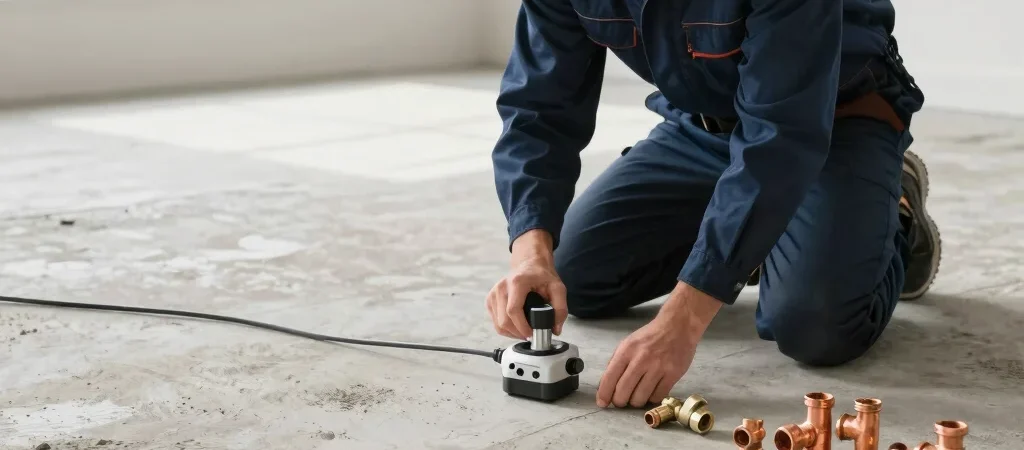
When pressurized water pipes run beneath a concrete foundation, even a hairline fracture can release hundreds of gallons of water over a few days. Homeowners often miss the initial warning signs because the water remains buried under inches of concrete and flooring. Identifying these subsurface failures early saves structural integrity and prevents costly mold remediation beneath your subfloor.
Early Signs of Subfloor Pipe Failure
The most frequent indicator of a slab leak is an unexplained increase in municipal water consumption without any change in household usage habits. You may also notice the continuous sound of running water when all faucets are shut off, or feel warm zones on tile and hardwood floors where hot water lines have ruptured. In advanced cases, damp baseboards or hairline cracks in interior drywall indicate that moisture is rising through the foundation.
Professional Leak Detection Procedures
Locating a leak beneath slab concrete requires non-invasive acoustic sensors and electronic pipe locators rather than aggressive demolition. Licensed plumbing specialists pressurize supply lines with safe tracer gas or use high-sensitivity ground microphones to pinpoint the exact location of escaping water. This targeted approach allows technicians to isolate the damaged pipe section and present flat-rate diagnostic findings before cutting into flooring.
Repair Strategies for Foundation Pipes
Depending on the age and material of your piping, repairs can range from a direct spot repair to a complete overhead reroute using flexible PEX lines. Overhead rerouting completely eliminates pressurized pipes under the slab, routing new code-compliant lines through attic or wall cavities. This methodical solution ensures long-term reliability and protects your foundation from future subsurface pressurized leaks.